
How to Choose the Best Outdoor Heater in NZ: The Complete Buyer's Guide
By the Kelray Outdoor Heating team, New Zealand manufacturers of infrared outdoor heaters since the 1990s. Updated October 2026.
The short answer:
The best outdoor heater for most New Zealand homes is a fixed electric infrared heater built from marine-grade 316 stainless steel, sized to the area you want to heat and installed by a registered electrician on its own circuit.
Here's why each part of that matters:
Electric infrared warms people and surfaces directly, like sunshine, so it works well in open and breezy outdoor spaces where hot air blows away.
316 stainless steel resists the salt-laden air found across most of New Zealand. The cheaper 304 grade used in most imported heaters can discolour and rust in coastal conditions.
Correct sizing and mounting height decide whether you actually feel warm.
Professional installation keeps the heater safe, compliant and covered by warranty.
The rest of this guide explains each of these points in detail, so you can compare any outdoor heater on the market with confidence.
Why New Zealand conditions are tough on outdoor heaters
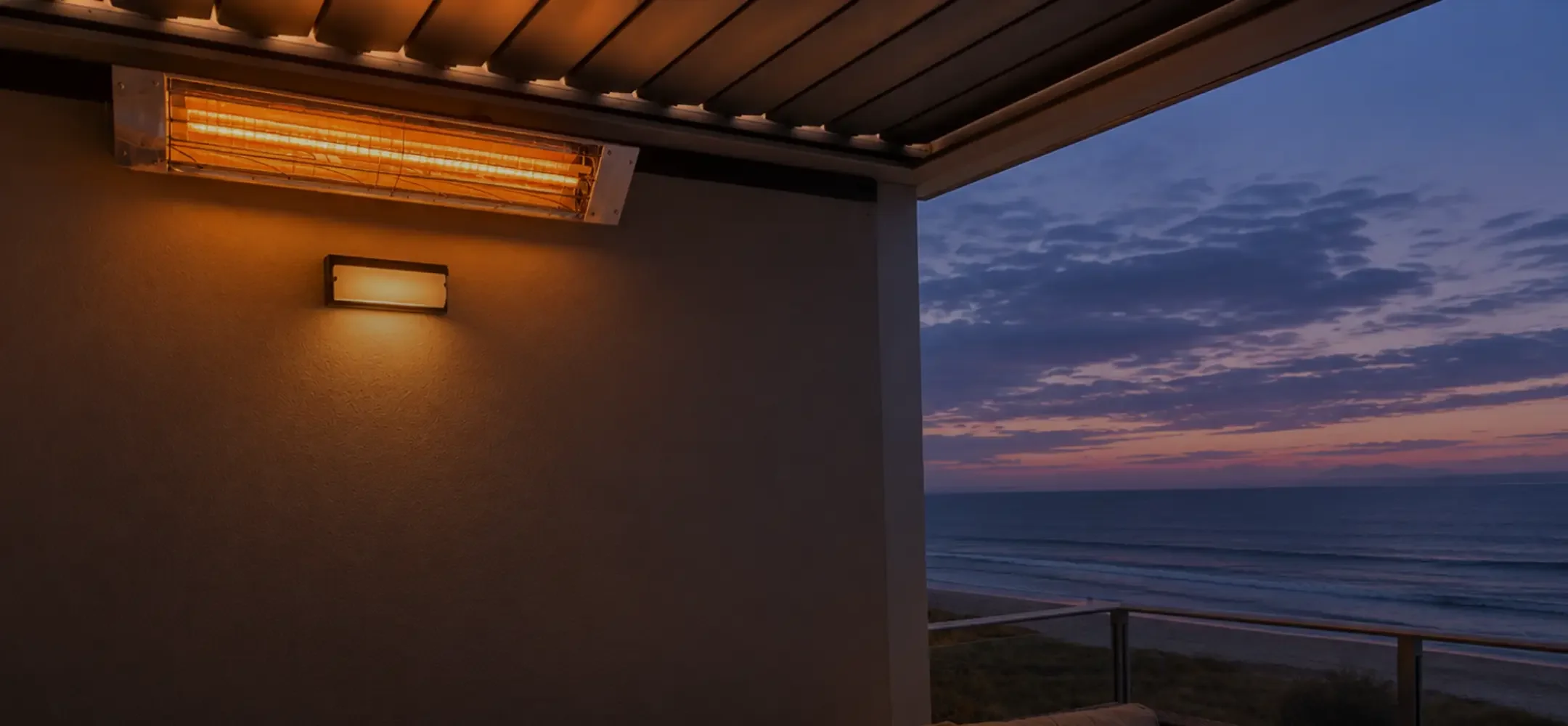
New Zealand is a long, narrow island nation with roughly 15,000 km of coastline, and no part of the country is much more than 130 km from the sea. Most of us live in coastal towns and cities, and prevailing winds carry fine salt spray well inland.
Salt is the enemy of metal. Airborne salt settles on outdoor fixtures, draws in moisture and attacks the protective surface of steel. Add our high humidity, frequent rain and strong UV, and outdoor products here work much harder than they would in many of the countries they are designed for.
Most outdoor heaters sold in New Zealand are imported, and most are designed for markets where salt exposure is not a major concern. That's where the grade of stainless steel becomes the single most important thing to check.
304 vs 316 stainless steel: what's the difference?
"Stainless steel" is not one material. It's a family of alloys, and not all of them handle salt air well. For outdoor heaters, you only need to know about two grades.
| 304 stainless steel | 316 stainless steel (marine grade) | |
|---|---|---|
| Common name | "Standard" or "food grade" stainless | Marine-grade stainless |
| Key ingredients | Around 18% chromium, 8% nickel | Around 16 to 18% chromium, 10% nickel, plus 2 to 3% molybdenum |
| Resistance to salt (chlorides) | Moderate | Significantly higher |
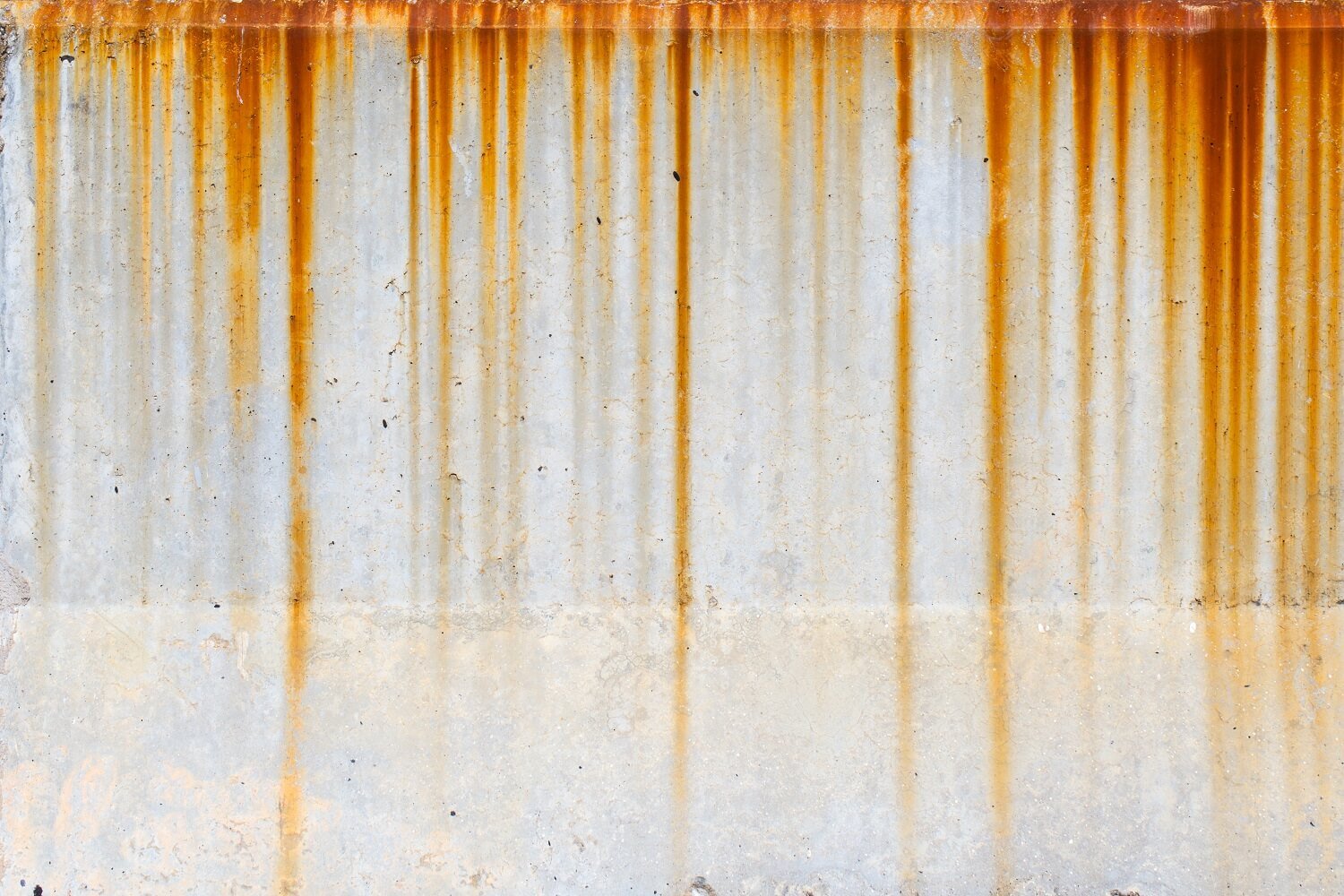
| Typical outcome near the coast | Brown "tea staining", pitting and rust spots, especially at fixings and welds | Holds its finish far longer with basic cleaning |
| Where it's used | Kitchen sinks, indoor appliances, many imported outdoor products | Boat fittings, coastal balustrades, jetties, Kelray heaters |
| Cost | Cheaper | More expensive to buy and to manufacture |
The key difference is molybdenum. This added element makes 316 steel much more resistant to pitting corrosion caused by chlorides, the salts found in sea spray. That's why 316 is the standard choice for boats, marinas and coastal buildings.
Why the small parts matter too
A heater body made from 316 steel can still fail if the screws, bolts, brackets or grill are made from a lower grade. Rust often starts at the fixings and then stains the surrounding surface. Every Kelray heater uses 316 stainless steel throughout, including the small nuts, bolts and components.
Who needs 316 stainless?
In short, most New Zealanders. 316 is strongly recommended if your heater will be:
Within a few kilometres of the coast, or anywhere you can smell the sea
On a deck or balcony exposed to prevailing onshore winds
Near a swimming pool or spa, where chlorinated water adds to the chloride load
At a café, bar or restaurant where the heater needs to look good for years under daily use
If you live well inland, 316 still gives you a longer-lasting finish and better value over the life of the heater.
Quick tip: Ask the seller directly, "Is this heater 316 stainless, including all fixings?" If they can't give a clear yes, assume it's 304 or a lower grade.
Comparing Common Outdoor Heaters Used in NZ
| Heater type | How it heats | Best for | Watch out for |
|---|---|---|---|
| Fixed electric infrared | Radiant heat that warms people and surfaces directly | Decks, patios, pergolas, louvre roofs, hospitality | Needs an electrician to install |
| Gas patio heater (mushroom style) | Heats the air around a flame | Occasional use in large open spaces | Gas bottles to refill, emissions, heat blows away in wind, takes up floor space |
| Portable plug-in electric | Radiant or fan | Very small, sheltered spaces | Lower output, trip hazard, not designed for permanent outdoor exposure |
| Fire pit | Open flame | Atmosphere and ambience | Smoke, fire restrictions, uneven heat |
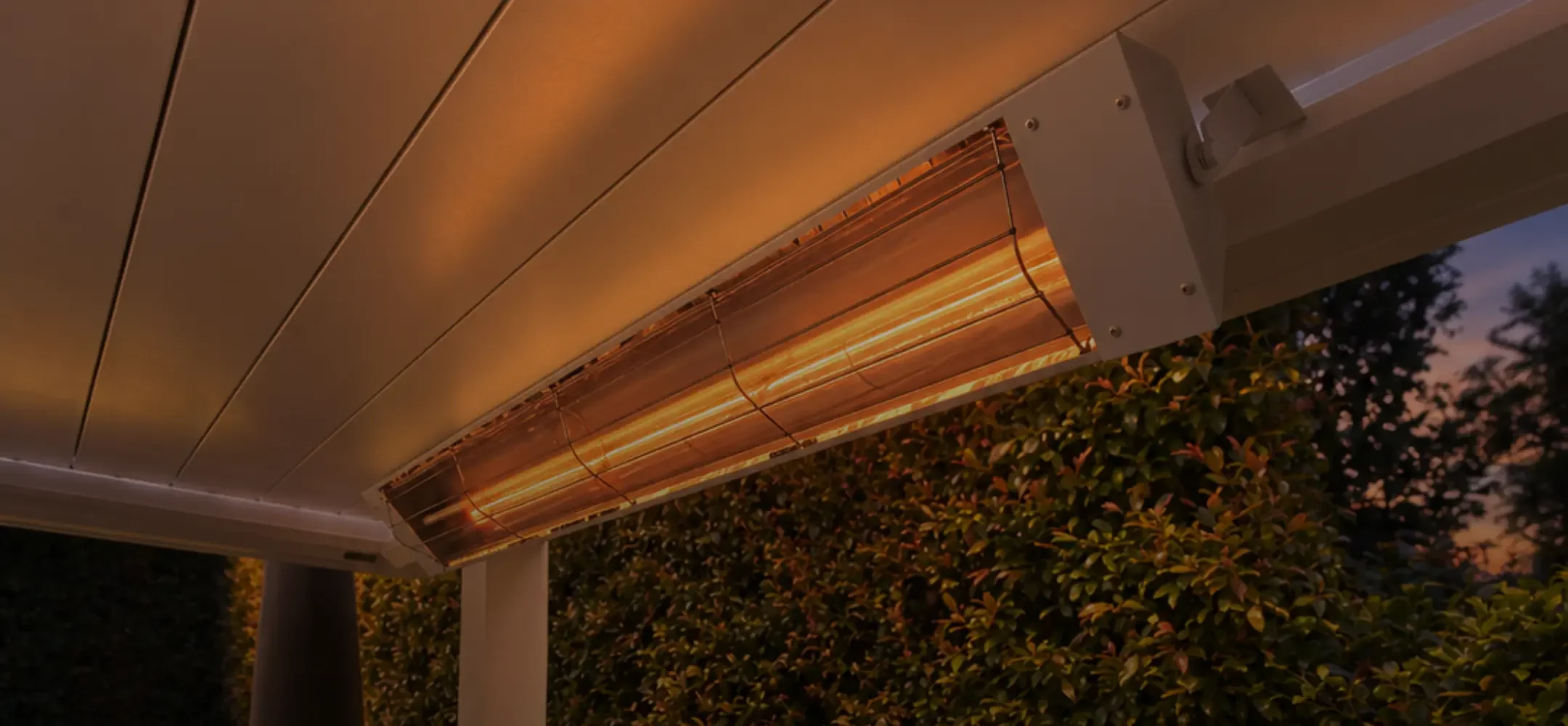
For year-round use in New Zealand, fixed electric infrared is usually the most practical choice. It produces no emissions and uses no oxygen, turns on instantly, has no bottles to swap, and keeps your floor space clear.
How infrared heating works
Heats people, not the air
Infrared works like the sun. It sends radiant energy straight to people, furniture and floors, so a breeze can't carry the warmth away. Heaters that warm the air lose much of their heat as soon as the wind picks up.
Short, medium or long wave
Infrared heaters come in three types. Kelray uses medium-wave quartz elements for quick, effective warmth with a soft, comfortable glow rather than harsh glare.
Stay within 2 to 4 metres
People generally need to be within about 2 to 4 metres of a heater to feel its warmth, so placement matters as much as power.
Warmth is strongest close in and fades with distance.
How to Size an Outdoor Heater
The right size depends on:
The area you want to heat (measure length and width)
How high the heater can be mounted
How enclosed the space is (open, partly enclosed or fully enclosed)
Wind exposure
Whether people will be sitting or standing
As a guide, here's the approximate heat coverage for each Kelray model in an open or partly enclosed space:
| Model | Power | Approx. coverage |
|---|---|---|
| I-20 | 2 kW | 2.25 x 2.25 m |
| I-24 / I-25 | 2.4 / 2.5 kW | 2.5 x 2.5 m |
| I-30 | 3 kW | 3 x 3 m |
| I-40 | 4 kW | 3.5 x 3.5 m |
| ID-40 (dual element) | 4 kW | 4 x 3 m |
| ID-50 (dual element) | 5 kW | 4.5 x 3.25 m |
| ID-60 (dual element) | 6 kW | 4.5 x 4.5 m |
| ID-80 (dual element) | 8 kW | 5 x 5 m |
Fully enclosed spaces can be covered by a smaller heater. Windy or very exposed areas may need a larger heater or two heaters working together. For larger or irregular areas, two smaller heaters positioned well often give more even warmth than one large one.
If you're unsure, send us your measurements and we'll recommend the right model.
Where and how to mount an outdoor heater
Fixed infrared heaters can be mounted on a wall, a soffit, a pergola beam, under a louvre roof, or flush into a ceiling with the right kit. A few rules apply:
Where you can mount a heater
- Wall
- Soffit
- Pergola beam
- Under a louvre roof
- Flush in a ceiling (with kit)
Mount horizontally
Quartz elements are designed to run level. Angling them along a roof slope shortens element life and can void the warranty.
Keep heights and clearances
Each model has its own recommended mounting height. As a minimum, Kelray heaters go at least 1.8 m above the floor, 450 mm from a side wall and 150 mm below anything combustible, such as an awning, with 800 mm clear in front and 1 m from curtains.
Consider rain exposure
Kelray heaters are rated IPX4, meaning they resist splashing water from any direction. In very exposed spots, a weather hood (shown) adds extra protection.
What does an outdoor heater cost to run?
To estimate running costs, multiply the heater's power in kilowatts by your electricity price per kilowatt hour (kWh). You'll find your rate on your power bill.
Example at 40c per kWh:
2 kW I-20: about 80c per hour
3 kW I-30: about $1.20 per hour
4 kW I-40: about $1.60 per hour
8 kW ID-80: about $3.20 per hour
These are costs at full power. Because infrared heats people directly and starts working instantly, you only run it when you're actually using the space.
Warranty and lifespan: what to look for
An outdoor heater lives a hard life, so the warranty tells you a lot about how confident the manufacturer is in their product.
Kelray heaters carry a limited 5-year warranty, one of the longest available on an outdoor heater in New Zealand, with separate cover on elements.
Quartz elements typically last 7,000 to 10,000 hours depending on use, and can be replaced, so the heater body itself can keep going for many years.
Check whether local support and replacement parts are available. With a New Zealand-made heater, you're dealing with a local team who can advise you directly.
Maintenance tips for coastal homes
Even 316 stainless benefits from a little care, especially near the beach:
Turn off the power at the switchboard and let the heater cool completely.
Remove the grill and gently wipe the reflector with a soft cloth and water or glass cleaner.
Take care around the quartz element, which is fragile.
Make sure everything is dry before restoring power.
Clean every three months, or monthly if you're right on the beach. Rinsing salt off exterior surfaces regularly helps any outdoor metal keep its finish.
Outdoor heater buyer's checklist
Before you buy, make sure you can answer yes to these:
- Is the heater made from 316 marine-grade stainless steel, including all fixings?
- Is it the right size and power for my space and mounting height?
- Is it electric infrared, suitable for permanent outdoor installation?
- Does it have an appropriate water resistance rating (IPX4 or better)?
- Is there a multi-year warranty backed by a local company?
- Are replacement elements and local support available in New Zealand?
- Will it be installed by a registered electrician with a certificate of compliance?
- Can I get a finish that suits my home, such as powdercoat in a matching colour?
Why Kelray?
Kelray heaters are designed and manufactured in New Zealand specifically for our conditions. Every heater is built from marine-grade 316 stainless steel, including all small components, and is backed by a 5-year limited warranty. Our founders have been working in infrared heating in New Zealand since the early 1990s, and our heaters are used in thousands of homes and businesses across the country.
Heaters are available in brushed stainless or powdercoated in black, white or a range of Dulux Duralloy colours to match your home.
Browse the Kelray range or talk to our team about the best heater for your space.
Related reading: Why we use only marine-grade 316 steel for our heaters
Outdoor Heater Frequently Asked Questions
Click any question to see the answer.
What is the best outdoor heater in NZ?
For most New Zealand homes, the best outdoor heater is a fixed electric infrared heater made from marine-grade 316 stainless steel, correctly sized for the space and installed by a registered electrician.
This combination handles our salty coastal air, works well in breezy conditions and is efficient to run.
Why does my outdoor heater need to be 316 stainless steel?
316 stainless steel contains molybdenum, which greatly improves resistance to corrosion from salt in the air.
Much of New Zealand is exposed to airborne salt, and heaters made from 304 stainless or lower grades can discolour, pit and rust over time.
Is 304 stainless steel OK for an outdoor heater?
304 stainless can perform adequately in sheltered inland locations, but it is prone to tea staining and rust in coastal or poolside environments.
For most New Zealand properties, 316 is the safer long-term choice.
Are electric outdoor heaters better than gas?
Electric infrared heaters produce no emissions, use no oxygen, need no gas bottles and are less affected by wind because they warm people directly rather than the air.
Gas heaters can suit occasional use in large open spaces, but they are generally less convenient for regular use.
What size outdoor heater do I need?
As a guide, a 2 kW heater covers about 2.25 x 2.25 m, a 3 kW heater about 3 x 3 m, and an 8 kW heater about 5 x 5 m in an open or partly enclosed area.
Mounting height, wind exposure and how enclosed the space is all affect the result. If you're unsure, send us your measurements and we'll recommend the right model.
How much does it cost to run an outdoor heater in NZ?
Multiply the heater's power in kilowatts by your price per kWh, which you'll find on your power bill.
At 40c per kWh, a 3 kW heater costs about $1.20 per hour at full power.
Can I install an outdoor heater myself?
No. Fixed outdoor heaters must be hardwired by a qualified, registered electrician, who should provide a certificate of compliance.
Can outdoor heaters get wet?
Kelray heaters are rated IPX4, meaning they resist splashing water from any direction.
They should not run while exposed to heavy rain, and a weather hood is recommended for very exposed locations.
How long do outdoor heaters last?
A well-built 316 stainless heater can last many years. Quartz elements typically last 7,000 to 10,000 hours and can be replaced when needed.
Are Kelray heaters made in New Zealand?
Yes. Kelray heaters are designed and manufactured in New Zealand for local conditions.